
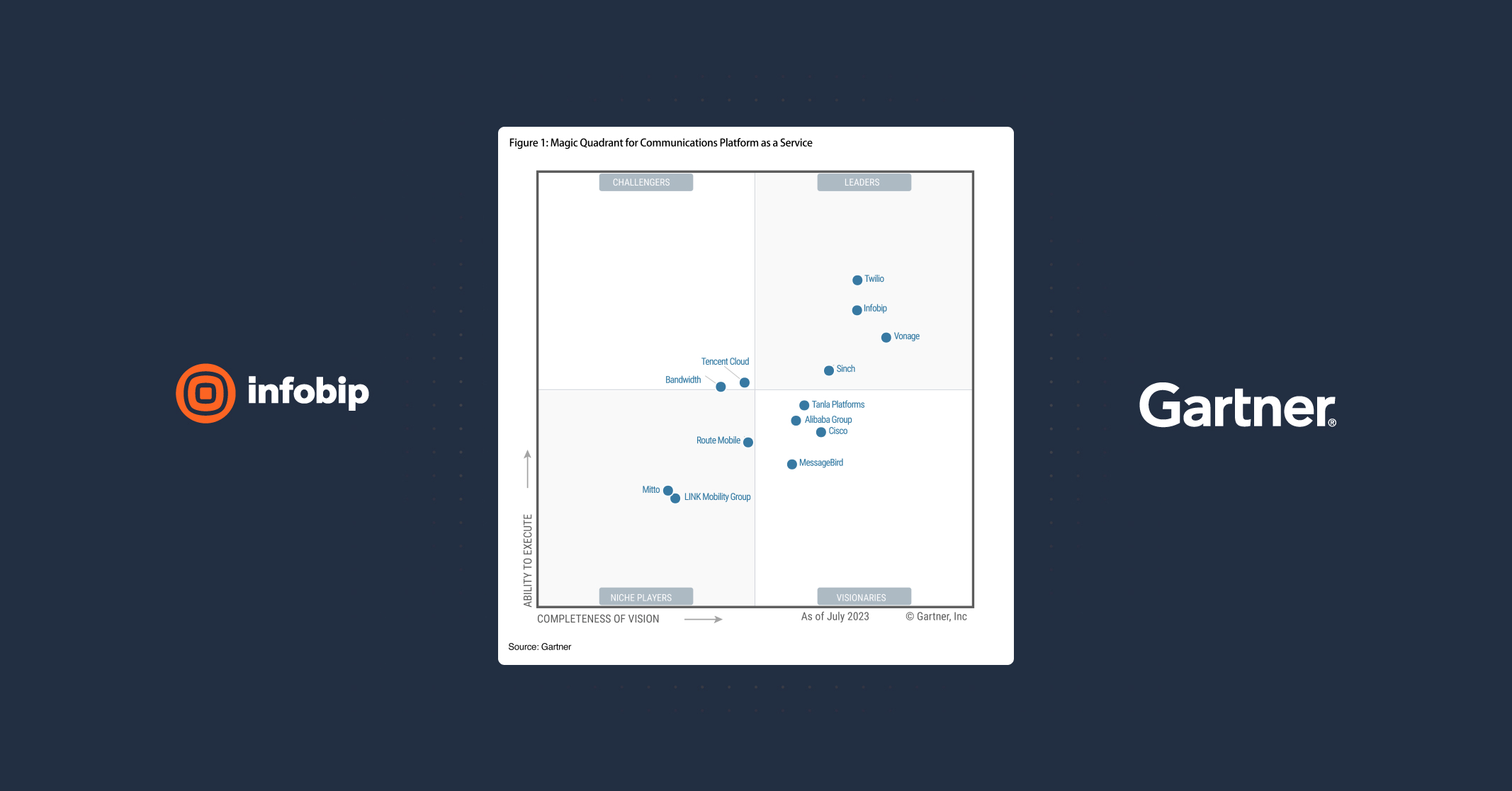
Gartner Magic Quadrant for Unified Communications as a Service (UCaaS)
The Gartner Magic Quadrant for Unified Communications as a Service (UCaaS) is a research report that compares providers of cloud-based business communications. It can help organisations understand the market and create a shortlist of potential suppliers—but it should be one part of a wider selection process, rather than a final verdict on which service is right for a business.
What is UCaaS?
Unified Communications as a Service brings together workplace communication tools in a cloud-hosted service. Depending on the provider and package, a UCaaS platform may include business telephony, video meetings, instant messaging, presence information, voicemail and collaboration features.
Because the service is delivered from the cloud, organisations can often manage users and features centrally and support staff across multiple offices or locations. The actual capabilities, integrations, service levels and pricing vary between providers.
What is a Gartner Magic Quadrant?
A Gartner Magic Quadrant is a graphical assessment of vendors in a defined technology market. Gartner positions providers using two main criteria:
- Ability to Execute: Gartner’s assessment of a provider’s ability to deliver on its plans and serve customers. This can include factors such as product capabilities, sales and support, operations and market performance.
- Completeness of Vision: Gartner’s assessment of how well a provider understands the market’s direction and has a strategy to meet future needs. This can include product strategy, innovation, market understanding and business plans.
These criteria are represented on the vertical and horizontal axes of the chart. Vendors are then placed into one of four quadrants: Leaders, Challengers, Visionaries and Niche Players.
What do the four quadrants mean?
- Leaders are assessed as having strong execution and a broad, forward-looking vision within the market Gartner has defined.
- Challengers are assessed as having strong execution, but may have a less complete vision or a narrower strategic position than Leaders.
- Visionaries are assessed as having a strong vision, while their ability to execute may be less established or consistent.
- Niche Players may focus on particular customer types, regions or capabilities, or may have a more limited market presence or scope.
These labels describe a vendor’s position in the context of a particular report. They are not a guarantee of product quality or suitability for every organisation.
How can organisations use the UCaaS Magic Quadrant?
The report can provide a useful overview of the competitive landscape and help decision-makers identify providers for further investigation. It may also offer insight into market trends, vendor strategies and differences in product focus.
When reviewing the report, organisations should check its publication date, market definition and vendor inclusion criteria. The UCaaS market changes over time, so a provider’s position in one edition should not be treated as a permanent assessment. Reports may also focus on particular regions, customer sizes or use cases, which can affect how relevant the findings are to an individual organisation.
What to assess when choosing a UCaaS provider
Shortlist providers against your organisation’s practical requirements, including:
- Calling and collaboration features: Confirm that the platform supports your needs for telephony, meetings, messaging and contact centre capabilities, where relevant.
- Reliability and support: Review service commitments, resilience, incident communications and the support options available in the UK.
- Security and compliance: Ask about data handling, access controls, encryption, identity integrations and the provider’s approach to applicable legal and regulatory requirements.
- Integrations: Check compatibility with the systems employees rely on, such as productivity suites, customer relationship management platforms and business applications.
- User experience and accessibility: Consider how easy the service is to use across desktop and mobile devices, and whether it meets the needs of different users.
- Migration and management: Understand how numbers, users, devices and existing services will be migrated, and what tools are available for ongoing administration.
- Total cost: Compare licences, calling charges, hardware, implementation, support and any additional features—not just the headline subscription price.
A pilot with representative users can help test call quality, administration, integrations and support before a full deployment. It is also sensible to request references from organisations with similar requirements and to review contract terms carefully.
Use the report as a starting point
The Gartner Magic Quadrant for UCaaS can help frame research, but it cannot replace an organisation’s own requirements, due diligence and testing. The best provider is the one that meets your technical, operational and commercial needs—not necessarily the one placed highest on a chart.
Gartner and Magic Quadrant are registered trademarks of Gartner, Inc. and/or its affiliates. Gartner does not endorse any vendor, product or service depicted in its research publications and does not advise technology users to select only those vendors with the highest ratings. Gartner research publications reflect the opinions of Gartner’s research organisation and should be considered alongside independent evaluation.
Essential Tips for Navigating the Gartner Magic Quadrant: A Guide to Unified Communications as a Service
- Check the report year; vendor positions can change.
- Compare Leaders with your specific requirements, not just rankings.
- Review the Completeness of Vision and Ability to Execute axes.
- Check which UCaaS features and regions the evaluation covers.
- Validate vendor claims with references and product demonstrations.
- Consider pricing, integrations, support and migration effort.
Check the report year; vendor positions can change.
Check the report year before relying on a Gartner Magic Quadrant for UCaaS. The market evolves quickly, and vendors’ products, strategies and performance can change, so their positions may differ between editions. Use the latest report available and treat older versions as historical context rather than a current guide.
Compare Leaders with your specific requirements, not just rankings.
When reviewing the Gartner Magic Quadrant for UCaaS, treat a Leader position as a starting point, not a recommendation. Compare each provider’s features, reliability, security, integrations, support and total cost against your organisation’s specific needs. A highly ranked service may not be the best fit for your users, existing systems or budget, so use the chart to shape a shortlist and then verify your choice through demos, references and, where possible, a pilot.
Review the Completeness of Vision and Ability to Execute axes.
When reviewing the Gartner Magic Quadrant for Unified Communications as a Service (UCaaS), look beyond a provider’s overall position and consider both axes. “Completeness of Vision” reflects Gartner’s assessment of how well a provider understands the market and plans for its future, while “Ability to Execute” considers how effectively it delivers its products and services. Think about which matters most to your organisation: a strong vision may indicate a focus on innovation, while strong execution may suggest an established ability to deliver. Use both assessments as prompts for further research, and compare them with your own requirements, independent evidence and product testing.
Check which UCaaS features and regions the evaluation covers.
Before using a Gartner Magic Quadrant to shortlist UCaaS providers, check exactly which features and regions the evaluation covers. A report may focus on particular capabilities, customer types or geographic markets, so it might not reflect the services available in the UK or the needs of your organisation. Compare the report’s scope with your requirements for calling, messaging, meetings, integrations and regional support, and verify details directly with each provider.
Validate vendor claims with references and product demonstrations.
Validate vendor claims by speaking to customers with needs similar to your own and asking about their experience with reliability, support, implementation and day-to-day use. A tailored product demonstration can then show how the platform handles your real workflows, integrations and essential features. Together, customer references and practical demonstrations help you look beyond a vendor’s position in the Gartner Magic Quadrant and assess whether its service is the right fit for your organisation.
Consider pricing, integrations, support and migration effort.
When comparing UCaaS providers, look beyond their position in the Gartner Magic Quadrant and consider the practicalities of adopting and running each service. Compare the full cost, including licences, call charges, implementation and support, and check that the platform integrates with the tools your teams already use. Assess the quality and availability of customer support, too. Finally, understand the effort involved in migrating users, phone numbers, devices and existing services, as this can affect both the project timeline and overall cost.
Tags: ability to execute, business telephony, challengers, cloud communications, cloud-based business communications, collaboration tools, completeness of vision, gartner magic quadrant, instant messaging, integrations, leaders, migration and management, niche players, reliability and support, security and compliance, total cost, ucaas, ucaas features, ucaas market research, ucaas provider selection, ucaas providers, unified communications as a service, user experience, vendor evaluation, video meetings, visionaries