
UCaaS Magic Quadrant 2020: What It Showed and Why It Matters
The 2020 Gartner Magic Quadrant for Unified Communications as a Service (UCaaS) offered a snapshot of a fast-changing market. As organisations moved more work online and remote working became essential, businesses were looking for reliable ways to bring calling, messaging and online meetings together.
The report compared UCaaS providers on two broad measures: their ability to execute and the completeness of their vision. Its findings can help businesses understand the market, but the Magic Quadrant is not a product review or a recommendation for every organisation. The right solution depends on a company’s needs, existing technology and budget.
What is UCaaS?
Unified Communications as a Service (UCaaS) delivers communication tools through the cloud, typically on a subscription basis. A UCaaS platform may combine business telephony, video and audio meetings, instant messaging, presence information and integrations with other business applications.
Because the service is cloud-based, organisations can often manage users and features centrally, without maintaining as much on-site communications equipment. Staff can use the service from different locations and, depending on the provider and configuration, across desktop phones, computers and mobile devices.
What the 2020 Magic Quadrant assessed
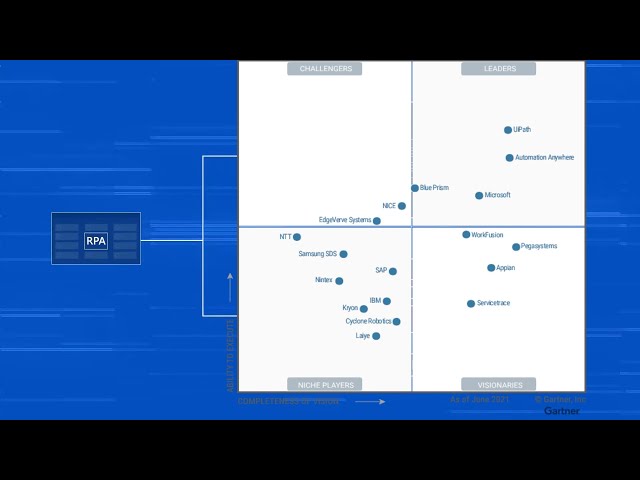
Gartner’s framework considers vendors’ ability to execute and completeness of vision. In broad terms, these dimensions cover matters such as product capability, service and support, market understanding, strategy and business performance. The placement of a provider in the chart reflects Gartner’s assessment against its own criteria at the time of publication.
The 2020 report included established communications companies as well as providers whose cloud services were gaining momentum. Names associated with the market’s leading group included 8×8, Cisco, Microsoft and RingCentral. Other vendors were assessed across the remaining quadrants. The chart should be read in the context of Gartner’s full report, rather than as a simple ranking from best to worst.
The impact of remote working
The timing of the 2020 report was significant. The pandemic accelerated the shift to remote and hybrid working, bringing collaboration tools into the centre of everyday business operations. Organisations needed employees to stay reachable, hold meetings and work together even when they were not in the same office.
This raised the profile of cloud communications, but it also highlighted practical concerns. Businesses had to consider call quality, resilience, security, ease of administration and whether employees could use the tools effectively. A wide feature set alone was not enough: a platform also needed to work reliably in the organisation’s actual network and working environment.
How to use the report when choosing a provider
The Magic Quadrant can be a useful starting point for building a shortlist, but it should not replace a detailed assessment. Before selecting a UCaaS provider, organisations should consider:
- Calling requirements: Check number availability, call routing, voicemail, emergency calling and support for existing phones or headsets.
- Meeting and messaging needs: Assess the quality and usability of meetings, chat, file sharing and presence features.
- Integrations: Confirm that the service works with business-critical tools, such as customer relationship management (CRM) and productivity applications.
- Security and compliance: Review identity management, access controls, data handling, retention options and relevant compliance requirements.
- Reliability and support: Understand service commitments, outage processes, technical support availability and options for business continuity.
- Total cost: Compare licences and usage charges alongside implementation, number porting, training, equipment and support costs.
- Ease of use: Trial the service with employees and administrators to see whether it suits the way they work.
A historical snapshot, not a current ranking
The UCaaS Magic Quadrant for 2020 records how Gartner assessed the market at that point in time. Since then, providers have changed their products, pricing and strategies, and the wider communications market has continued to evolve. The report may still offer useful historical context, but businesses making a decision today should consult recent information and test services against their current requirements.
Ultimately, the value of a UCaaS platform lies in how well it supports an organisation’s people and operations. Gartner’s 2020 Magic Quadrant can help frame the conversation; careful requirements gathering, demonstrations and real-world trials are what help determine the right fit.
Gartner and Magic Quadrant are trademarks of Gartner, Inc. and/or its affiliates. Gartner does not endorse any vendor, product or service depicted in its research publications. This article is an independent overview and is not a reproduction of Gartner’s report.
Benefits of the UCaaS Magic Quadrant 2020: A Comprehensive Market Overview and Decision-Making Tool
- Offers a snapshot of the UCaaS market in 2020.
- Helps businesses compare providers using consistent criteria.
- Highlights vendors’ ability to execute and vision.
- Provides a starting point for building a shortlist.
- Adds context to UCaaS trends during the shift to remote working.
7 Limitations of the UCaaS Magic Quadrant 2020 for Informed Decision-Making
- Reflects the market only as it stood in 2020.
- May be outdated for current buying decisions.
- Gartner’s scoring criteria may not match every organisation’s priorities.
- A vendor’s position does not guarantee a good fit.
- Can favour broad market capability over specific business needs.
- Does not replace product trials or detailed supplier checks.
- The full report may require a paid subscription.
Offers a snapshot of the UCaaS market in 2020.
The UCaaS Magic Quadrant 2020 offers a useful snapshot of the unified communications market at a time when cloud-based calling, messaging and video meetings were becoming increasingly important. It shows how Gartner assessed providers’ ability to execute and strength of vision in that year, helping businesses understand the competitive landscape and identify vendors for further research. As it reflects the market in 2020, it is best used as historical context rather than a guide to today’s provider rankings.
Helps businesses compare providers using consistent criteria.
One of the benefits of the 2020 UCaaS Magic Quadrant is that it helps businesses compare providers using a consistent set of criteria. By assessing vendors against dimensions such as their ability to execute and completeness of vision, it offers a structured starting point for researching the market. This can help organisations identify potential providers and prepare more focused questions, while remembering that the chart is a guide rather than a substitute for checking each service against their own requirements.
Highlights vendors’ ability to execute and vision.
One of the key benefits of the 2020 UCaaS Magic Quadrant is that it compares providers on both their ability to execute and the strength of their vision. This gives businesses a broader view than a simple feature comparison, helping them consider how well vendors deliver their services today as well as how clearly they are preparing for the future of unified communications.
Provides a starting point for building a shortlist.
The 2020 UCaaS Magic Quadrant can provide a useful starting point when building a shortlist of potential providers. By presenting an overview of how Gartner assessed vendors’ ability to execute and completeness of vision at the time, it helps organisations identify providers to investigate further. The findings should be treated as a guide rather than a final recommendation, with the shortlist refined according to each organisation’s requirements, budget and preferred features.
Adds context to UCaaS trends during the shift to remote working.
The UCaaS Magic Quadrant 2020 provides useful context for understanding how the market was changing as businesses rapidly shifted to remote working. It highlights the growing importance of cloud-based calling, messaging and meeting tools, as organisations needed employees to stay connected from different locations. Seen as a snapshot of that period, the report helps explain why flexibility, reliability and integrated collaboration became central considerations when choosing a UCaaS provider.
Reflects the market only as it stood in 2020.
A key limitation of the UCaaS Magic Quadrant 2020 is that it reflects the market only as it stood at the time of publication. Since then, providers may have changed their features, pricing, support and overall strategy, while new technologies and customer expectations have reshaped the sector. As a result, the report is useful for historical context, but businesses should consult current research and assess providers against their needs today before making a decision.
May be outdated for current buying decisions.
One drawback of the UCaaS Magic Quadrant 2020 is that it may be outdated for current buying decisions. Since its publication, providers have changed their products, pricing and strategies, while the market itself has continued to evolve. The report can offer useful historical context, but businesses should also review current vendor information, compare recent alternatives and trial solutions against their needs before choosing a platform.
Gartner’s scoring criteria may not match every organisation’s priorities.
One limitation of the UCaaS Magic Quadrant 2020 is that Gartner’s scoring criteria may not reflect every organisation’s priorities. The report assesses providers against a broad set of factors, but a business may place greater importance on specific needs, such as UK-based support, integration with existing systems, predictable pricing or particular security requirements. As a result, a provider’s position in the Quadrant should be treated as a useful starting point rather than a substitute for evaluating solutions against your organisation’s own requirements.
A vendor’s position does not guarantee a good fit.
A vendor’s position in the 2020 UCaaS Magic Quadrant does not guarantee that its service will suit your organisation. The chart reflects Gartner’s assessment against broad criteria, while your needs may depend on specific requirements such as integrations, call handling, security, budget, support and ease of use. Treat vendor placement as a starting point for research, then compare services against your priorities and test them in practice.
Can favour broad market capability over specific business needs.
One drawback of the 2020 UCaaS Magic Quadrant is that its broad assessment of vendors may not reflect the specific needs of every business. A provider can perform strongly across Gartner’s market-wide criteria while still lacking features, integrations or support that are essential to a particular organisation. Businesses should therefore use the quadrant as a starting point, then assess shortlisted services against their own requirements.
Does not replace product trials or detailed supplier checks.
The UCaaS Magic Quadrant 2020 can help businesses understand the market, but it should not replace product trials or detailed supplier checks. A provider’s position in the chart does not guarantee that its service will suit your organisation’s needs, budget or existing systems. Before making a decision, compare current features and contract terms, check security and support arrangements, and trial shortlisted platforms with the people who will use and manage them.
The full report may require a paid subscription.
One drawback of the UCaaS Magic Quadrant 2020 is that access to the full report may require a paid subscription. This can make it harder for smaller businesses or readers without a Gartner account to review the detailed vendor assessments and methodology. As a result, they may need to rely on publicly available summaries, which can offer useful context but may not provide enough detail to support a thorough comparison.
Tags: 8x8, ability to execute, business communications, business telephony, cisco, cloud communications, collaboration tools, completeness of vision, compliance, crm, gartner magic quadrant 2020, hybrid working, instant messaging, integrations, microsoft, provider selection, reliability, remote working, ringcentral, security, service and support, total cost, ucaas, ucaas magic quadrant 2020, ucaas providers, unified communications as a service, video meetings