
UCaaS Magic Quadrant 2021: What Buyers Need to Know
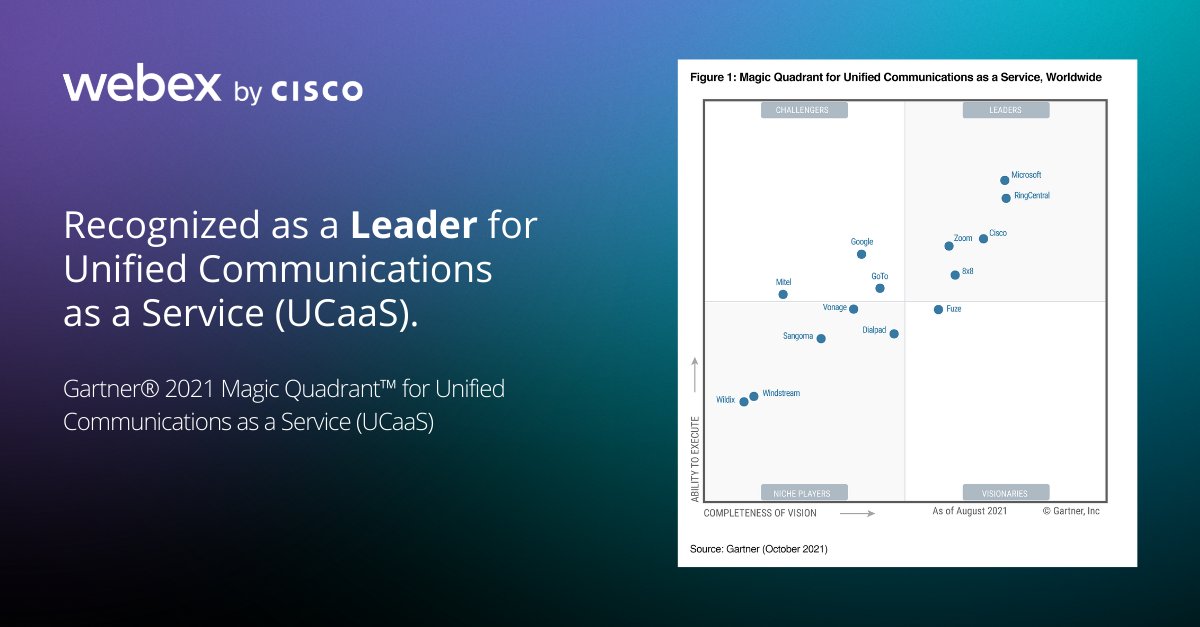
The Gartner Magic Quadrant for Unified Communications as a Service (UCaaS) 2021 offered organisations a snapshot of a fast-changing communications market. With remote and hybrid working becoming part of everyday business, companies were reassessing how they handled calls, meetings, messaging and collaboration.
The report is useful as a starting point for understanding the UCaaS landscape, but it should not be treated as a definitive buying guide. A provider’s position in a market assessment is only one part of choosing a service that fits your organisation.
What is UCaaS?
Unified Communications as a Service brings communications tools together through a cloud-based service. Depending on the provider and package, this may include business telephony, video conferencing, instant messaging, presence information and team collaboration features.
Instead of managing separate systems on site, an organisation can access these services over the internet and manage them through a provider’s platform. This can make it easier to support people working across offices, homes and other locations.
How to read the 2021 Magic Quadrant
Gartner’s Magic Quadrant assesses providers using two broad dimensions: Ability to Execute and Completeness of Vision. These dimensions determine a provider’s position in one of four categories:
- Leaders demonstrate strong execution and a well-developed vision for the market.
- Challengers show strong execution, while their vision may be less differentiated or comprehensive.
- Visionaries present compelling ideas and direction, but may have more limited execution or market reach.
- Niche Players may focus on particular markets, regions or use cases, or have a narrower offering.
These categories describe Gartner’s assessment at the time of publication. They are not a guarantee of service quality, a recommendation for every buyer or a substitute for evaluating a provider’s current capabilities.
Why the 2021 report attracted attention
In 2021, many organisations were adapting their communications to distributed workforces. The ability to provide reliable calling and collaboration tools outside the traditional office had become a practical business requirement. Buyers were also looking for services that could integrate with their existing software, support varied devices and be managed across multiple locations.
The UCaaS market included established communications companies as well as providers associated with cloud collaboration and online meetings. Names commonly considered by organisations evaluating the market included 8×8, Cisco, Microsoft, RingCentral and Zoom. Their product ranges and capabilities have changed over time, so current product information should be checked directly with each provider.
What organisations should consider
A Magic Quadrant position can help create a shortlist, but the best solution depends on your business requirements. Before making a decision, consider:
- Calling requirements: Check whether the service supports your number plan, call flows, contact centre needs and locations.
- Reliability and support: Ask about service availability, resilience, support hours and incident management.
- Security and compliance: Review access controls, data handling, encryption and any regulatory requirements relevant to your organisation.
- Integrations: Confirm that the platform works with your business applications, identity systems and existing hardware.
- User experience: Consider how straightforward the service is to use across desktop, mobile and desk-phone devices.
- Administration: Assess whether your team can manage users, numbers, policies and reporting without unnecessary complexity.
- Total cost: Compare licensing, implementation, support, connectivity and any additional charges—not just the advertised monthly price.
- Migration: Establish how numbers, users and call services will be moved, and what support is available during the transition.
Is the UCaaS Magic Quadrant 2021 still relevant?
The 2021 report can provide historical context and show how the market was assessed at that point in time. However, cloud communications products evolve rapidly. Features, service models, pricing, company strategies and market positions may have changed since publication.
For a present-day procurement decision, use the report alongside current product documentation, independent reviews, demonstrations and reference checks. It is also worth testing shortlisted services with the people who will use and administer them.
Conclusion
The UCaaS Magic Quadrant 2021 can help organisations understand the providers and trends that shaped the market during a significant period of change. Its greatest value is as a framework for further research—not as a final verdict on which platform to buy.
Gartner’s research is copyrighted and its assessments reflect the information available at the time. For exact placements and methodology, consult the original Gartner report. Gartner does not endorse any vendor, product or service depicted in its research.
Understanding the UCaaS Magic Quadrant 2021: Key Insights and Provider Analysis
- What is the UCaaS Magic Quadrant 2021?
- Which providers were included in Gartner’s 2021 UCaaS Magic Quadrant?
- Which companies were named Leaders in the 2021 UCaaS Magic Quadrant?
- How did Gartner assess UCaaS providers in 2021?
- What do Leaders, Challengers, Visionaries and Niche Players mean in the Magic Quadrant?
- Is the UCaaS Magic Quadrant 2021 still relevant when choosing a provider today?
- How can businesses use the 2021 UCaaS Magic Quadrant to compare providers?
- Where can I find Gartner’s full UCaaS Magic Quadrant 2021 report?
What is the UCaaS Magic Quadrant 2021?
The UCaaS Magic Quadrant 2021 was Gartner’s assessment of providers in the Unified Communications as a Service market at that time. It compared vendors based on their Ability to Execute and Completeness of Vision, placing them in one of four categories: Leaders, Challengers, Visionaries or Niche Players. The report offered a snapshot of the market in 2021, rather than a recommendation for every organisation or a guide to providers’ current capabilities.
Which providers were included in Gartner’s 2021 UCaaS Magic Quadrant?
Gartner’s 2021 UCaaS Magic Quadrant assessed providers including 8×8, Atos, Cisco, Fuze, Google, LogMeIn, Microsoft, Mitel, NEC, RingCentral, Unify, Verizon, Vonage and Zoom. The assessment reflected Gartner’s view of the market at the time; provider offerings and company names may have changed since then.
Which companies were named Leaders in the 2021 UCaaS Magic Quadrant?
The companies named Leaders in Gartner’s 2021 Magic Quadrant for Unified Communications as a Service (UCaaS) were 8×8, Cisco, RingCentral and Zoom. The designation reflected Gartner’s assessment of each provider’s ability to execute and completeness of vision at the time; it should not be taken as a current ranking or a recommendation for every organisation.
How did Gartner assess UCaaS providers in 2021?
Gartner assessed UCaaS providers in 2021 across two main dimensions: “Ability to Execute” and “Completeness of Vision”. Its evaluation considered factors such as each provider’s products and services, overall business viability, sales and customer experience, market responsiveness, and operational performance, alongside its understanding of the market, product and business strategy, innovation and geographic reach. These assessments informed each provider’s position in the Magic Quadrant’s Leaders, Challengers, Visionaries or Niche Players categories.
What do Leaders, Challengers, Visionaries and Niche Players mean in the Magic Quadrant?
In Gartner’s Magic Quadrant, providers are grouped according to two factors: their ability to execute and the completeness of their vision. Leaders score strongly in both areas; Challengers execute well but may have a less developed or differentiated vision; Visionaries show a strong understanding of where the market is heading but may be less established in execution; and Niche Players tend to focus on specific customers, regions or use cases, or offer a narrower range of capabilities. These labels reflect Gartner’s assessment at the time of publication and should be considered alongside your organisation’s own requirements.
Is the UCaaS Magic Quadrant 2021 still relevant when choosing a provider today?
The UCaaS Magic Quadrant 2021 can offer useful historical context and help you understand how providers were assessed at the time, but it should not be the sole basis for choosing a provider today. UCaaS products, features and market positions have changed since 2021, so compare current offerings, pricing, security, support and integration options, and assess them against your organisation’s needs.
How can businesses use the 2021 UCaaS Magic Quadrant to compare providers?
Businesses can use the 2021 UCaaS Magic Quadrant as a starting point for comparing providers, looking at Gartner’s assessment of each supplier’s ability to execute and completeness of vision. The categories can help identify vendors to investigate further, but they should not determine the decision on their own. Compare shortlisted providers against your organisation’s needs, including calling features, integrations, security, reliability, support, user experience and total cost. As the report reflects the market in 2021, check each provider’s current services and capabilities before making a decision.
Where can I find Gartner’s full UCaaS Magic Quadrant 2021 report?
You can find Gartner’s full UCaaS Magic Quadrant 2021 report on Gartner’s website. Access may require a Gartner subscription or registration, although some providers featured in the report may offer a complimentary copy or a related summary on their own websites. Check that any copy is authorised and refer to Gartner’s original report for the complete research and methodology.
Tags: 8x8, ability to execute, business telephony, cisco, cloud communications, completeness of vision, gartner magic quadrant 2021, gartner research, hybrid work, instant messaging, integrations, microsoft, migration, procurement, reliability and support, remote work, ringcentral, security and compliance, team collaboration, total cost, ucaas, ucaas magic quadrant 2021, ucaas providers, unified communications as a service, video conferencing, zoom