
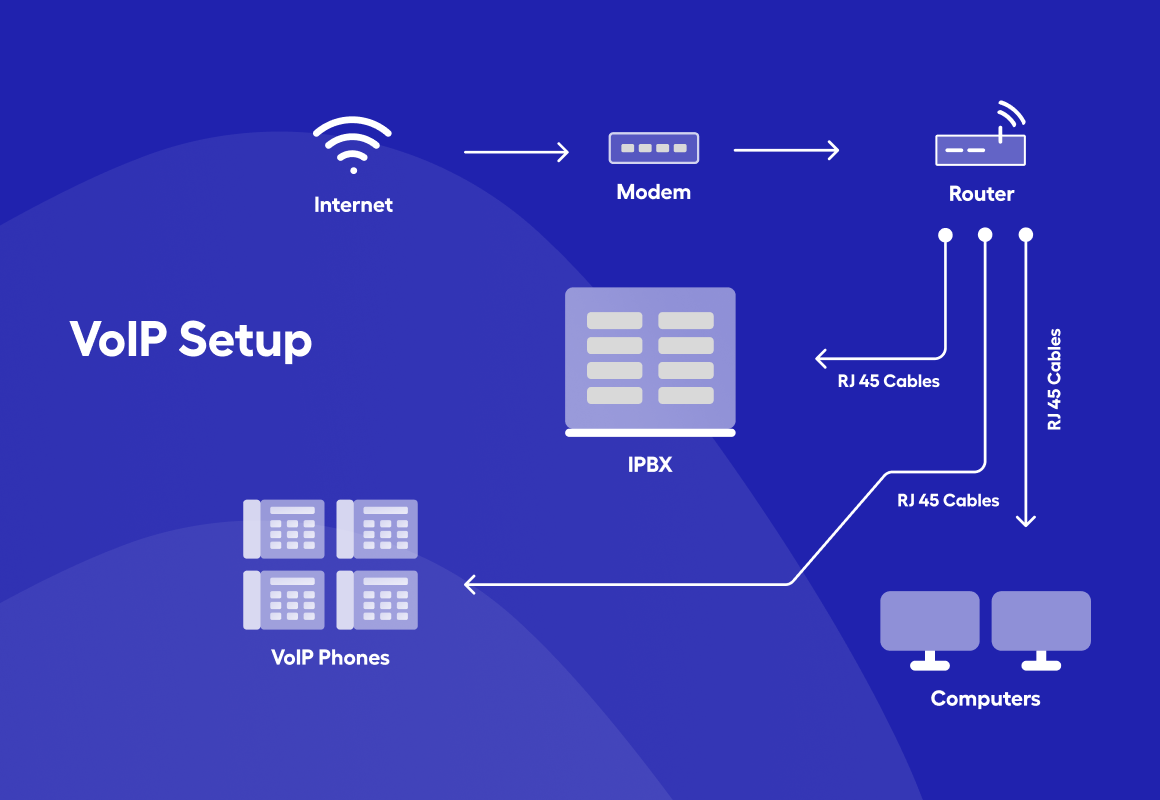
The Benefits of VoIP Business Telephone Systems
VoIP (Voice over Internet Protocol) business telephone systems have revolutionised the way companies communicate internally and with their customers. By transmitting voice calls over the internet rather than traditional phone lines, VoIP systems offer numerous advantages that can enhance efficiency and productivity in the workplace.
Cost-Effective Communication
One of the primary benefits of VoIP business telephone systems is cost savings. Traditional phone systems can be expensive to install and maintain, especially for businesses with multiple locations or a high volume of calls. VoIP systems, on the other hand, utilise existing internet infrastructure, reducing the need for costly hardware and maintenance.
Flexibility and Scalability
VoIP systems are highly flexible and scalable, making them ideal for businesses of all sizes. Whether you are a small startup or a large corporation, VoIP technology can easily adapt to your changing communication needs. Adding new lines or features is simple and cost-effective, allowing your business to grow without limitations.
Advanced Features
VoIP business telephone systems offer a wide range of advanced features that can improve communication within your organisation. Features such as call forwarding, voicemail-to-email transcription, conference calling, and auto-attendant menus enhance efficiency and streamline workflow.
Mobility and Remote Work
In today’s fast-paced business environment, flexibility is key. VoIP systems enable employees to make and receive calls from anywhere with an internet connection, promoting remote work and increasing productivity. Mobile apps further extend this flexibility by allowing employees to use their personal devices for work-related calls.
Enhanced Customer Service
By integrating customer relationship management (CRM) tools with VoIP systems, businesses can provide superior customer service. Call analytics, call recording, and personalised greetings help businesses better understand customer needs and tailor their interactions accordingly.
Conclusion
VoIP business telephone systems offer a cost-effective, flexible, feature-rich solution for modern businesses looking to enhance their communication capabilities. By leveraging the power of the internet, businesses can streamline operations, improve customer service, and adapt to changing work environments with ease.
Top 7 Advantages of VoIP Business Telephone Systems: A Cost-Effective and Flexible Communication Solution
- Cost-effective communication solution
- Flexibility to scale according to business needs
- Advanced features like call forwarding and voicemail transcription
- Mobility for remote work and on-the-go communication
- Enhanced customer service capabilities through integration with CRM tools
- Easy setup and maintenance compared to traditional phone systems
- Improved productivity with streamlined workflow and efficient call management
Challenges of VoIP Business Telephone Systems: Key Concerns and Limitations
- Dependence on Internet Connection
- Potential Quality Issues
- Security Concerns
- Integration Challenges
- Emergency Calls Limitations
- Reliability Concerns
Cost-effective communication solution
One of the standout advantages of VoIP business telephone systems is their cost-effectiveness. By leveraging existing internet infrastructure for voice calls, businesses can significantly reduce expenses associated with traditional phone systems. The elimination of costly hardware and maintenance requirements makes VoIP a practical and budget-friendly communication solution for companies of all sizes. This cost-saving benefit allows businesses to allocate resources more efficiently towards other areas of growth and development.
Flexibility to scale according to business needs
One key advantage of VoIP business telephone systems is their flexibility to scale according to business needs. Whether a company is experiencing rapid growth or needs to downsize, VoIP systems can easily adjust to accommodate changes in the number of users, locations, or features required. This scalability ensures that businesses can efficiently manage their communication infrastructure without being constrained by traditional phone system limitations.
Advanced features like call forwarding and voicemail transcription
VoIP business telephone systems offer a range of advanced features that can significantly enhance communication efficiency within organisations. Features such as call forwarding and voicemail transcription provide employees with the flexibility to manage their calls effectively, ensuring that important messages are never missed. Call forwarding allows calls to be seamlessly redirected to alternative numbers or devices, enabling employees to stay connected even when they are away from their desks. Voicemail transcription converts voicemail messages into text format, making it easier for employees to quickly review and respond to messages, ultimately improving overall productivity and responsiveness.
Mobility for remote work and on-the-go communication
VoIP business telephone systems provide unparalleled mobility for remote work and on-the-go communication. With the ability to make and receive calls from anywhere with an internet connection, employees are no longer tied to their desks. This flexibility allows for seamless collaboration and communication, enabling teams to stay connected and productive regardless of their physical location. Whether working from home, travelling for business, or attending meetings on the go, VoIP systems ensure that employees can always stay in touch and remain accessible to colleagues and clients.
Enhanced customer service capabilities through integration with CRM tools
VoIP business telephone systems offer a significant advantage in enhancing customer service capabilities through seamless integration with CRM tools. By combining VoIP technology with customer relationship management software, businesses can gain valuable insights into customer interactions, preferences, and history. This integration enables businesses to provide personalised and efficient service to customers, leading to improved satisfaction and loyalty. Call analytics, call recording features, and customised greetings enhance the overall customer experience, allowing businesses to better understand and meet the needs of their clients.
Easy setup and maintenance compared to traditional phone systems
One significant advantage of VoIP business telephone systems is their ease of setup and maintenance in comparison to traditional phone systems. With VoIP, businesses can avoid the complexities of installing and managing physical phone lines and hardware. Setting up a VoIP system typically involves minimal equipment and can be done quickly, often with the help of user-friendly interfaces. Additionally, maintenance tasks such as adding new lines or features are straightforward and can usually be managed internally without the need for specialised technicians, saving time and resources for businesses.
Improved productivity with streamlined workflow and efficient call management
VoIP business telephone systems offer a significant advantage in improving productivity through streamlined workflow and efficient call management. By integrating advanced features such as call forwarding, voicemail-to-email transcription, and auto-attendant menus, businesses can ensure that calls are efficiently routed and managed. This streamlined workflow reduces the time spent on manual tasks, allowing employees to focus on more critical aspects of their work. Additionally, the ability to easily track and monitor calls enhances accountability and ensures that no important communication slips through the cracks. Overall, the improved efficiency and call management capabilities of VoIP systems contribute to a more productive and effective workplace environment.
Dependence on Internet Connection
An inherent drawback of VoIP business telephone systems is their reliance on a stable internet connection for consistent and reliable communication. In situations where the internet connection is slow or unstable, voice quality may suffer, leading to dropped calls or delays in communication. This dependence on internet connectivity can pose challenges for businesses operating in areas with limited or unreliable internet infrastructure, potentially impacting their ability to maintain seamless communication with clients and colleagues.
Potential Quality Issues
One significant drawback of VoIP business telephone systems is the potential for quality issues arising from poor internet connectivity. Inadequate internet quality can result in dropped calls or distorted audio during conversations, impacting communication reliability and effectiveness. Businesses relying on VoIP systems must ensure a stable and high-speed internet connection to mitigate these issues and maintain seamless communication with clients and colleagues.
Security Concerns
Security Concerns are a significant drawback of VoIP business telephone systems. Without proper security measures in place, these systems can be susceptible to hacking and cyber attacks. Hackers may exploit vulnerabilities in the VoIP infrastructure to intercept calls, eavesdrop on conversations, or even disrupt communication channels. It is crucial for businesses to implement robust security protocols and encryption methods to safeguard their VoIP systems and protect sensitive information from potential breaches.
Integration Challenges
Integration Challenges can pose a significant con when it comes to VoIP business telephone systems. Compatibility issues with existing hardware or software can complicate the implementation process, leading to delays and potential disruptions in communication. Ensuring that all components work seamlessly together and integrating them with current infrastructure can be a complex task that requires careful planning and technical expertise. Failure to address these compatibility issues effectively may result in inefficiencies and frustrations for businesses seeking to adopt VoIP technology.
Emergency Calls Limitations
One significant drawback of VoIP business telephone systems is their potential limitation in accurately providing location information for emergency calls. Unlike traditional landline systems that are associated with fixed physical addresses, VoIP calls can be made from any location with an internet connection. This lack of fixed location information can pose challenges for emergency services in pinpointing the exact whereabouts of a caller in need of urgent assistance, potentially leading to delays or inaccuracies in response times during critical situations. Businesses using VoIP systems must be aware of this limitation and take necessary precautions to ensure the safety and well-being of their employees and customers in case of emergencies.
Reliability Concerns
Reliability concerns are a significant con associated with VoIP business telephone systems. Power outages or internet disruptions can potentially disrupt the availability of VoIP services, leading to communication downtime for businesses. In situations where a stable power supply or internet connection is crucial, such as during emergencies or critical business operations, the reliance on external factors for VoIP functionality can pose a risk. Businesses considering VoIP systems should carefully assess their infrastructure and implement backup solutions to mitigate the impact of potential reliability issues.
Tags: advanced features, benefits, business telephone systems, cost-effective communication, enhanced customer service, flexibility, mobility, remote work, scalability, voip, voip business telephone systems