
How to Find the Cheapest SIP Trunk Provider
Choosing the cheapest SIP trunk provider can help reduce business phone costs, particularly if your organisation makes frequent calls or is moving from traditional telephone lines to VoIP. But the lowest advertised rate is not always the lowest overall cost. Setup fees, number rental, call rates and contract terms can all affect what you pay.
This guide explains what to compare when looking for affordable SIP trunking in the UK, so you can find a service that suits your budget without compromising on reliability or support.
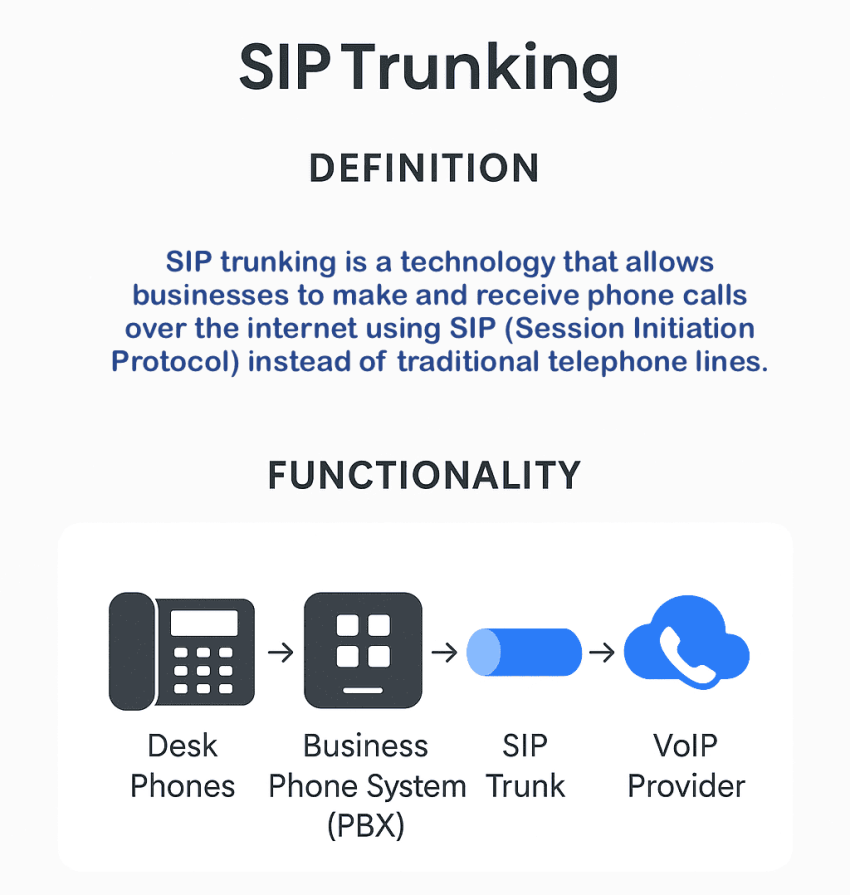
What is a SIP trunk?
A SIP trunk connects a business phone system, such as a compatible PBX, to the public telephone network using an internet connection. It can carry voice calls and, depending on the setup, other communications. Rather than paying for a traditional phone line for every call, businesses can choose a suitable number of channels and scale them as their needs change.
What makes a SIP trunk provider cheap?
Providers may advertise low per-minute rates, inclusive call bundles or a monthly price per channel. To compare offers fairly, look at the full cost of using the service, including:
- Monthly trunk or channel charges: Check what is included and whether channels are charged individually.
- Call rates: Compare UK landline, mobile and international rates based on the calls your business actually makes.
- Number charges: Ask whether new numbers, number porting and ongoing number rental carry separate fees.
- Setup and configuration: Find out whether installation, onboarding or technical support is charged separately.
- Contract terms: Check minimum terms, notice periods and any early termination charges.
- Additional features: Confirm whether features such as call recording, failover, analytics or emergency calling are included or cost extra.
How to compare SIP trunk prices
Start by reviewing your recent call usage. Estimate the number of simultaneous calls you need, your monthly call volumes and the proportion of calls made to landlines, mobiles and international destinations. This gives you a more realistic basis for comparing providers than a headline rate alone.
Then request a clear breakdown of charges. Check whether prices are quoted with or without VAT, whether calls are billed per second or per minute, and whether there are minimum call charges. If your call patterns vary, ask how the service will be billed during quieter and busier periods.
It is also worth checking how the service fits your existing phone system and internet connection. A low-cost trunk may not be suitable if it requires expensive hardware, specialist configuration or upgrades to your network.
Is the cheapest SIP trunk always the best choice?
Not necessarily. Price matters, but businesses also depend on clear call quality, dependable service and prompt help when something goes wrong. Before choosing a provider, ask about service availability, support hours, fault handling and options for routing calls if your internet connection or office becomes unavailable.
Security should be part of the comparison too. Ask how the provider helps protect against unauthorised use and unexpected call charges, and what configuration steps your business needs to take. The right safeguards depend on your phone system and network.
Questions to ask a SIP trunk provider
- What will the complete monthly cost be for our expected usage?
- Are calls billed per second or per minute, and are there minimum charges?
- Are number porting, setup and technical support included?
- How many simultaneous calls can we make, and can we change this later?
- What happens if our broadband connection or phone system fails?
- What contract and cancellation terms apply?
- Is our existing PBX compatible, and what configuration will be required?
Finding an affordable SIP trunk provider in the UK
The cheapest suitable provider is the one that offers the right combination of call rates, monthly charges, service quality and support for your organisation. Compare a few providers using the same call volumes and requirements, and ask for a full quote before making a decision.
If you are considering SIP trunking for your business, CommConn can help you explore your communication options. Get in touch to discuss your requirements and find out what solution may be right for your organisation.
Frequently asked questions
Can SIP trunking reduce business phone costs?
It can, depending on your current phone system, call volumes and internet connection. Compare all recurring and one-off charges with your existing costs to see whether it would be more economical for your business.
Do I need to replace my business phone system?
Not always. Some existing PBX systems support SIP trunks, while others may need an upgrade, a compatible interface or a replacement. Check compatibility before ordering a service.
How many SIP channels does my business need?
That depends on how many people need to make or receive external calls at the same time. Review busy-period call activity and discuss your requirements with the provider before choosing a channel capacity.
9 Benefits of Choosing the Cheapest SIP Trunk Provider
- Lower monthly phone costs
- Competitive call rates
- Pay for the capacity you need
- Scale channels as demand changes
- Keep your existing phone system, if compatible
- Reduce reliance on traditional phone lines
- Support remote and multi-site teams
- Compare clear pricing options
- Free up budget for other priorities
Six Drawbacks of Choosing the Cheapest SIP Trunk Provider
- Low prices may come with limited support.
- Setup and number-porting fees can add up.
- Call quality may depend on your internet connection.
- Some plans have restrictive contract terms.
- Essential features may cost extra.
- Low rates may exclude mobiles or international calls.
Lower monthly phone costs
Choosing a cost-effective SIP trunk provider can help lower your business’s monthly phone costs. By routing calls over an internet connection, SIP trunking can reduce reliance on traditional phone lines and their associated rental charges. You can also choose a plan and number of channels that match your call volumes, helping avoid paying for capacity you rarely use. Compare the full costs, including call rates, number rental and any additional fees, to make sure the savings suit your business.
Competitive call rates
Competitive call rates can make a cheapest SIP trunk provider an attractive choice for businesses that want to manage their phone bills without limiting how they communicate. By comparing rates for UK landlines, mobiles and international destinations, you can find a plan that better suits your calling patterns and helps keep costs predictable. Check how calls are billed and whether any additional fees apply, so you can assess the true value of the rates on offer.
Pay for the capacity you need
With a SIP trunk, you can choose the number of channels to suit how many calls your business needs to handle at the same time. This means you can avoid paying for unused capacity, while retaining the flexibility to add channels as your team or call volumes grow. Choosing the right capacity helps keep costs in check without compromising day-to-day communications.
Scale channels as demand changes
A key advantage of choosing an affordable SIP trunk provider is the flexibility to scale channels as demand changes. Add capacity when call volumes rise, such as during busy periods or business growth, and reduce it when demand falls. This means you can match your service to your needs, helping avoid paying for more simultaneous calls than your business requires.
Keep your existing phone system, if compatible
If your existing phone system is compatible with SIP trunking, you may be able to keep using it rather than invest in a replacement. This can make switching to a lower-cost SIP trunk provider more affordable, while allowing your team to retain familiar handsets and workflows. Check compatibility with the provider before making the move, as some systems may need configuration, an upgrade or additional equipment.
Reduce reliance on traditional phone lines
Choosing an affordable SIP trunk provider can help your business reduce its reliance on traditional phone lines. SIP trunking carries calls over an internet connection, so you may be able to replace or scale back conventional lines while keeping your existing business phone system, if it is compatible. This can simplify your setup, make it easier to add capacity as your needs change and potentially lower ongoing line costs.
Support remote and multi-site teams
A cost-effective SIP trunk provider can help keep remote and multi-site teams connected without the expense of maintaining separate traditional phone lines at every location. Staff can make and receive business calls through a compatible phone system or softphone, wherever they work, while presenting consistent business numbers. This makes it easier for colleagues and customers to stay in touch and can help organisations manage communication costs as their teams grow or change.
Compare clear pricing options
Comparing clear pricing options makes it easier to find a SIP trunk provider that fits your budget and call requirements. Look beyond headline rates and check what each quote includes, such as channel rental, call charges, number porting, setup and support. A transparent breakdown helps you compare providers fairly, avoid unexpected costs and choose a service with confidence.
Free up budget for other priorities
Choosing a cost-effective SIP trunk provider can reduce your business’s monthly phone bill and free up budget for other priorities. The savings could be put towards staff development, customer service, new equipment or business growth. By comparing the full cost of each service—not just the advertised call rates—you can seek better value while ensuring the solution still meets your organisation’s needs.
Low prices may come with limited support.
Low prices can sometimes come with limited customer support. A budget SIP trunk provider may offer shorter support hours, slower response times or charge extra for help with setup and troubleshooting. Before choosing a plan, check what support is included, when it is available and whether urgent faults are handled promptly. This helps you judge whether the savings are worth the level of assistance your business may need.
Setup and number-porting fees can add up.
Setup and number-porting fees can add up, making a seemingly low-cost SIP trunk less affordable than it first appears. Some providers charge separately to configure the service, transfer existing numbers or provide technical support during the switch. Before signing up, check for one-off and ongoing charges and compare the total cost over the contract period, not just the advertised monthly price.
Call quality may depend on your internet connection.
With a low-cost SIP trunk, call quality may depend heavily on the reliability and capacity of your internet connection. Slow speeds, network congestion or an unstable connection can lead to delays, dropped calls or poor audio. Before choosing a provider, check that your broadband can handle your expected call volumes and ask whether the service offers support or failover options to help keep calls running during an interruption.
Some plans have restrictive contract terms.
Some of the cheapest SIP trunk plans may come with restrictive contract terms, such as long minimum commitments, limited flexibility to change your channel capacity or steep early termination fees. These conditions can make it harder or more costly to adapt as your business needs change. Before signing up, check the contract length, notice period, cancellation charges and any limits on changing your plan.
Essential features may cost extra.
One drawback of choosing the cheapest SIP trunk provider is that essential features may not be included in the advertised price. Services such as call recording, number porting, failover, detailed call reporting or additional support could incur extra charges, making the overall cost higher than expected. Before signing up, check exactly what is included and ask for a full breakdown of any optional or mandatory fees.
Low rates may exclude mobiles or international calls.
Low headline rates may apply only to calls to UK landlines, with calls to mobiles or international destinations charged at a higher rate. If your business regularly calls customers, suppliers or colleagues on mobiles or overseas, these extra costs can quickly outweigh the apparent savings. Check the provider’s full rate card and compare it against your typical call patterns before choosing a plan.
Tags: affordable sip trunking, business communications, business phone costs, call quality, call rates, call routing, channel capacity, cheapest sip trunk provider, contract terms, failover, internet connection, monthly charges, number porting, number rental, pbx compatibility, security, service reliability, setup fees, sip trunk costs, sip trunk prices, technical support, uk sip trunk provider, voip