
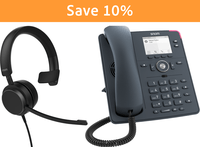
The Benefits of VoIP Home Phone Equipment
VoIP (Voice over Internet Protocol) technology has revolutionised the way we communicate, offering cost-effective and feature-rich alternatives to traditional landline phones. VoIP home phone equipment, in particular, brings a host of benefits to households looking to upgrade their communication systems.
Cost-Effective Communication
One of the primary advantages of VoIP home phone equipment is its cost-effectiveness. By transmitting voice calls over the internet, VoIP eliminates the need for a dedicated phone line, resulting in significant cost savings for users. Additionally, international calls made through VoIP are often much cheaper than traditional landline rates, making it an attractive option for families with relatives overseas.
Feature-Rich Functionality
VoIP home phone equipment offers a range of advanced features that enhance the user experience. Features such as call forwarding, voicemail-to-email transcription, and video calling are commonly included in VoIP packages, providing users with greater flexibility and convenience in their communication.
Flexibility and Mobility
With VoIP home phone equipment, users are not tied to a specific physical location to make or receive calls. As long as there is an internet connection available, users can access their VoIP service from anywhere in the world. This level of flexibility is particularly beneficial for individuals who travel frequently or work remotely.
Integration with Smart Home Devices
VoIP home phone equipment can seamlessly integrate with smart home devices, allowing users to control their communication system through voice commands or mobile apps. This integration enhances the overall connectivity within the household and simplifies daily tasks such as making calls or managing voicemail.
Reliability and Call Quality
Despite relying on internet connectivity, VoIP home phone equipment offers high-quality audio and reliable call connections. Advances in technology have minimised issues such as dropped calls or poor sound quality, ensuring that users can enjoy clear communication experiences with their VoIP service.
In conclusion, VoIP home phone equipment presents a modern and efficient solution for households seeking enhanced communication capabilities. With its cost-effectiveness, feature-rich functionality, flexibility, integration with smart devices, and reliability, VoIP technology continues to redefine how we connect with each other within our homes.
Essential FAQs on VoIP Home Phone Equipment: What You Need to Know
- Can I use VoIP for my home phone?
- Can any landline phone be used with VoIP?
- Can you get a VoIP phone for home?
- What do I need for a VoIP phone at home?
- Can I just plug a VoIP phone into my router?
- Which VoIP is best for home use?
- Which equipment is needed for VoIP?
Can I use VoIP for my home phone?
Yes, you can absolutely use VoIP for your home phone. VoIP technology allows you to make and receive phone calls using your internet connection instead of a traditional landline. By setting up VoIP home phone equipment, you can enjoy cost-effective communication, feature-rich functionality, flexibility in making calls from anywhere with an internet connection, integration with smart home devices, and reliable call quality. Making the switch to VoIP for your home phone can bring numerous benefits and enhance your overall communication experience within your household.
Can any landline phone be used with VoIP?
When it comes to using VoIP technology, not all landline phones are compatible out of the box. While some traditional analogue phones can be adapted for use with VoIP through an Analog Telephone Adapter (ATA), not all landline phones may work seamlessly with VoIP systems. It is recommended to check with your VoIP service provider for specific compatibility requirements and recommendations to ensure a smooth transition to VoIP home phone equipment.
Can you get a VoIP phone for home?
Yes, you can get a VoIP phone for home use. VoIP technology has made significant advancements in recent years, making it accessible and practical for residential users. A VoIP phone for home functions similarly to a traditional landline phone but operates over the internet, offering cost-effective calling options and a range of advanced features. By connecting a VoIP phone to your home internet network, you can make and receive calls using VoIP services, providing greater flexibility and convenience in your communication setup. Whether you are looking to reduce your phone bill, access enhanced calling features, or integrate with smart home devices, a VoIP phone for home is a versatile and beneficial choice for modern households.
What do I need for a VoIP phone at home?
When setting up a VoIP phone at home, you will need a few essential components to ensure a seamless communication experience. Firstly, you will require a reliable internet connection with sufficient bandwidth to support VoIP calls. A high-speed broadband connection is recommended to maintain call quality and avoid disruptions. Additionally, you will need a VoIP-compatible phone or adapter to convert your analogue voice signals into digital data that can be transmitted over the internet. Some VoIP service providers may also offer softphone applications that allow you to make calls using your computer or mobile device. Lastly, it is essential to have a subscription with a VoIP service provider who will supply you with the necessary credentials and settings to configure your VoIP phone for use at home. By having these key elements in place, you can enjoy the benefits of VoIP technology within your household effortlessly.
Can I just plug a VoIP phone into my router?
When it comes to setting up VoIP home phone equipment, one common question that arises is, “Can I just plug a VoIP phone into my router?” The answer is usually yes, as most VoIP phones are designed to be easily connected to a router using an Ethernet cable. By plugging the VoIP phone directly into the router, you can establish a stable internet connection for making and receiving calls. However, it is important to ensure that your router is compatible with VoIP technology and has the necessary bandwidth to support voice data transmission effectively. Additionally, configuring the VoIP phone settings may be required to ensure seamless integration with your network and service provider.
Which VoIP is best for home use?
When considering the best VoIP option for home use, it is essential to assess your specific needs and preferences. Factors such as call quality, features, pricing, and customer support should all be taken into account when selecting a VoIP service provider. Some popular VoIP options for home use include Skype, Vonage, and Google Voice, each offering unique features and benefits tailored to different user requirements. It is advisable to research and compare various VoIP providers to determine which one aligns best with your communication needs and budget constraints for an optimal home phone experience.
Which equipment is needed for VoIP?
To set up a VoIP system at home, you will need a few essential pieces of equipment. Firstly, you will require a high-speed internet connection to ensure smooth and reliable voice communication over the internet. Next, you will need a VoIP-enabled device, such as a VoIP phone, analogue telephone adapter (ATA) to connect your existing landline phone to the VoIP network, or a computer or smartphone with VoIP software installed. Additionally, a router with Quality of Service (QoS) capabilities can help prioritise voice traffic for better call quality. Lastly, a subscription to a VoIP service provider is necessary to make and receive calls using the VoIP technology. By having these key pieces of equipment in place, you can enjoy the benefits of VoIP communication in your home seamlessly.
Tags: benefits, call quality, communication systems, cost-effective, feature-rich, flexibility, home phone equipment, integration, internet connection, mobility, reliability, smart home devices, traditional landline phones, voip, voip home phone equipment, voip technology