
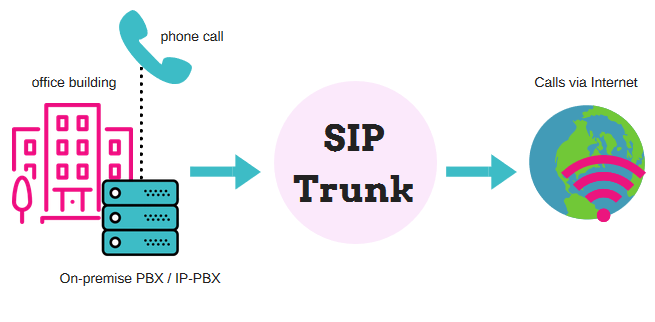
The Benefits of SIP Trunk for Home Use
Session Initiation Protocol (SIP) trunking is a technology that allows you to make voice calls over the internet rather than traditional phone lines. While SIP trunking is commonly used in business settings, it also offers numerous benefits for home users.
Cost-Effective Communication
One of the primary advantages of using a SIP trunk for home use is cost savings. SIP trunks typically offer lower call rates compared to traditional phone services, especially for long-distance and international calls. By leveraging the power of the internet, you can enjoy high-quality voice calls at a fraction of the cost.
Flexibility and Scalability
SIP trunking provides flexibility and scalability that traditional phone lines cannot match. With SIP trunks, you can easily add or remove phone lines as needed without the hassle of physical installation or hardware changes. This scalability makes it ideal for households with varying communication needs.
Enhanced Features
In addition to basic voice calling, SIP trunking offers a range of advanced features that can enhance your communication experience. Features such as call forwarding, voicemail-to-email transcription, and virtual phone numbers give you greater control over how you manage your calls.
Reliability and Redundancy
SIP trunking is known for its reliability and redundancy. In the event of an outage or disruption in one location, calls can easily be rerouted to another location or device, ensuring that you never miss an important call. This level of redundancy is crucial for maintaining seamless communication at home.
Easy Integration with Existing Systems
Integrating a SIP trunk into your existing communication systems is straightforward and hassle-free. Whether you use a traditional landline phone or a modern VoIP system, SIP trunking can seamlessly integrate with your setup, allowing you to enjoy its benefits without major disruptions.
Conclusion
Considering the cost savings, flexibility, enhanced features, reliability, and ease of integration that SIP trunking offers, it’s clear why more and more home users are turning to this technology for their communication needs. If you’re looking to revolutionise your home communication setup, exploring the world of SIP trunking may be the perfect solution.
Top 8 Advantages of SIP Trunking for Home Communication: Cost Savings, Flexibility, and More
- Cost-effective calling rates for long-distance and international calls
- Flexibility to easily add or remove phone lines as needed
- Advanced features like call forwarding and voicemail-to-email transcription
- Reliable communication with redundancy in case of outages
- Seamless integration with existing communication systems
- Scalability to accommodate varying communication needs at home
- High-quality voice calls over the internet
- Enhanced control over call management
Seven Drawbacks of Using SIP Trunking at Home
- Initial setup may require technical knowledge and expertise
- Dependence on internet connectivity for making and receiving calls
- Potential for call quality issues due to internet connection fluctuations
- Limited availability of emergency services compared to traditional landline services
- Security concerns related to potential hacking or eavesdropping on VoIP calls
- Compatibility issues with certain older phone systems or devices
- Lack of physical location tracking for emergency services when using SIP trunking
Cost-effective calling rates for long-distance and international calls
SIP trunking for home use offers a significant advantage in the form of cost-effective calling rates, particularly for long-distance and international calls. By leveraging the power of the internet to transmit voice data, SIP trunks can provide users with lower call rates compared to traditional phone services. This cost-saving benefit allows home users to stay connected with friends and family abroad or conduct business calls without worrying about exorbitant charges, making SIP trunking an attractive option for those seeking affordable long-distance and international communication solutions.
Flexibility to easily add or remove phone lines as needed
One of the key advantages of using a SIP trunk for home communication is the flexibility it offers in easily adding or removing phone lines as needed. Unlike traditional phone services that require physical installation and hardware changes, SIP trunking allows homeowners to scale their phone lines up or down effortlessly. This flexibility enables households to adapt to changing communication needs without the constraints of fixed infrastructure, providing a seamless and convenient way to manage their phone services.
Advanced features like call forwarding and voicemail-to-email transcription
SIP trunking for home users offers a range of advanced features that elevate the communication experience. With capabilities such as call forwarding and voicemail-to-email transcription, users can enjoy greater control and convenience in managing their calls. Call forwarding allows calls to be seamlessly redirected to another number or device, ensuring that important calls are never missed. Additionally, the ability to receive voicemail messages as email transcriptions provides a convenient way to access and organise messages, even when away from home. These advanced features not only enhance communication efficiency but also add a layer of flexibility and accessibility to the home phone system.
Reliable communication with redundancy in case of outages
SIP trunking for home use offers reliable communication with built-in redundancy to ensure seamless connectivity even in the event of outages. This feature allows calls to be automatically rerouted to alternative locations or devices, guaranteeing that important calls are never missed. The redundancy of SIP trunking provides peace of mind for home users, knowing that their communication remains uninterrupted and dependable regardless of any unforeseen disruptions.
Seamless integration with existing communication systems
One significant benefit of using a SIP trunk for home communication is its seamless integration with existing communication systems. Whether you have a traditional landline phone or a modern VoIP setup, SIP trunking can effortlessly integrate with your current infrastructure. This compatibility ensures a smooth transition to SIP trunking without the need for major system overhauls or disruptions. By leveraging this feature, home users can enjoy the advantages of SIP trunking while maintaining continuity in their communication setup.
Scalability to accommodate varying communication needs at home
SIP trunking for home use offers the invaluable benefit of scalability, allowing households to easily adjust their communication setup to accommodate varying needs. Whether it’s adding new phone lines for growing families, setting up temporary lines for remote work, or simply reconfiguring the system to meet changing requirements, SIP trunking provides the flexibility needed to adapt seamlessly. This scalability ensures that home users can tailor their communication solutions to suit their specific needs without the constraints of traditional phone services.
High-quality voice calls over the internet
One notable advantage of using a SIP trunk for home communication is the ability to enjoy high-quality voice calls over the internet. Unlike traditional phone lines that may suffer from interference or poor sound quality, SIP trunking leverages internet connectivity to deliver crystal-clear audio during calls. This ensures that home users can experience seamless and reliable communication without any compromise on call clarity, making every conversation a pleasant and efficient experience.
Enhanced control over call management
One significant advantage of using a SIP trunk for home communication is the enhanced control it provides over call management. With features such as call forwarding, voicemail-to-email transcription, and virtual phone numbers, users have the ability to tailor their call handling to suit their individual preferences and needs. This level of control ensures that calls are managed efficiently and effectively, empowering users to stay connected on their own terms.
Initial setup may require technical knowledge and expertise
Setting up a SIP trunk for home use may pose a challenge for some individuals due to the technical knowledge and expertise required during the initial setup process. Configuring the necessary hardware, understanding network settings, and troubleshooting potential issues can be daunting tasks for those who are not familiar with telecommunications technology. This barrier to entry may deter some users from adopting SIP trunking for their home communication needs, highlighting the importance of seeking assistance from professionals or investing time in learning the technical aspects of setting up a SIP trunk effectively.
Dependence on internet connectivity for making and receiving calls
One significant drawback of using SIP trunking for home communication is the reliance on internet connectivity for making and receiving calls. In situations where the internet connection is unstable or experiences downtime, the ability to place or receive calls through SIP trunks may be compromised. This dependency on internet availability can pose challenges, especially in areas with unreliable or limited internet access, potentially leading to disruptions in communication when a stable connection is not guaranteed.
Potential for call quality issues due to internet connection fluctuations
One potential drawback of using a SIP trunk for home communication is the susceptibility to call quality issues caused by fluctuations in the internet connection. Since SIP trunking relies on internet connectivity to transmit voice calls, any disruptions or variations in the connection speed can lead to audio distortions, delays, or dropped calls. This can be particularly problematic in areas with unreliable internet service or during peak usage times when network congestion is high. Home users considering SIP trunking should be mindful of this con and ensure they have a stable and robust internet connection to minimise the risk of call quality issues.
Limited availability of emergency services compared to traditional landline services
One notable drawback of using SIP trunking for home communication is the limited availability of emergency services compared to traditional landline services. While traditional landlines are directly linked to physical addresses, enabling emergency services to pinpoint a caller’s location accurately, SIP trunking relies on internet connectivity, which may not always provide precise location information in case of an emergency. This limitation can pose challenges during critical situations where swift and accurate response from emergency services is crucial.
Security concerns related to potential hacking or eavesdropping on VoIP calls
One significant con of using SIP trunking for home communication is the security risks associated with potential hacking or eavesdropping on VoIP calls. Because SIP trunking relies on internet connectivity, there is a heightened vulnerability to cyber threats that could compromise the privacy and confidentiality of your conversations. Without proper security measures in place, malicious actors could intercept VoIP calls, gaining access to sensitive information and posing a risk to your personal data security. It is essential for home users considering SIP trunking to implement robust security protocols and encryption methods to mitigate these potential risks and safeguard their communication channels effectively.
Compatibility issues with certain older phone systems or devices
One potential drawback of using SIP trunking for home communication is the compatibility issues that may arise with certain older phone systems or devices. Older hardware may not fully support SIP technology, leading to challenges in integrating SIP trunks into existing setups. This could result in the need for additional equipment or upgrades to ensure seamless compatibility, which may incur extra costs and technical complexity for users with outdated communication systems. It is important for homeowners considering SIP trunking to assess the compatibility of their current devices and infrastructure to avoid potential issues during implementation.
Lack of physical location tracking for emergency services when using SIP trunking
One significant drawback of using SIP trunking for home communication is the lack of physical location tracking for emergency services. Unlike traditional landline phones that are directly linked to a fixed address, SIP trunking relies on internet connectivity, which can make it challenging for emergency services to accurately pinpoint a caller’s location in case of an emergency. This limitation poses a potential risk during critical situations where quick and precise location identification is crucial for timely assistance.
Tags: advanced features, benefits, call forwarding, calling rates, cost-effective communication, enhanced features, flexibility, home use, integration, international calls, long-distance calls, redundancy, reliability, scalability, sip trunk, sip trunk for home, voicemail-to-email transcription