
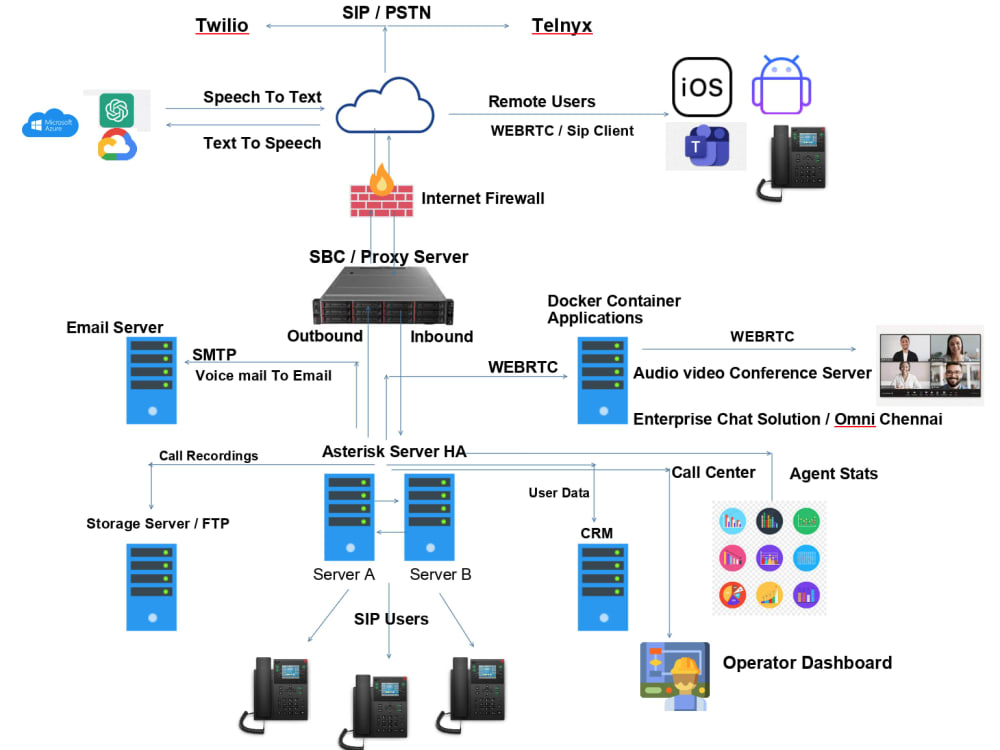
The Power of Enterprise Telephony Solutions
Enterprise telephony solutions have revolutionised the way businesses communicate internally and externally. In today’s fast-paced business environment, having a reliable and efficient telephony system is essential for maintaining seamless communication across all levels of an organisation.
One of the key benefits of enterprise telephony solutions is their ability to integrate various communication channels into a single platform. This integration allows employees to communicate through voice calls, video conferencing, instant messaging, and more, all from one unified system. This not only enhances collaboration but also improves productivity by streamlining communication processes.
Furthermore, enterprise telephony solutions offer advanced features such as call routing, voicemail-to-email transcription, call recording, and analytics tools. These features not only enhance communication efficiency but also provide valuable insights into call patterns and customer interactions.
Security is another crucial aspect of enterprise telephony solutions. With the rise of cyber threats targeting communication systems, it is essential for businesses to invest in secure telephony solutions that protect sensitive information and ensure data privacy.
Scalability is also a key advantage of enterprise telephony solutions. As businesses grow and evolve, their communication needs change as well. A scalable telephony system can easily adapt to these changing requirements, allowing businesses to expand their communication capabilities without major disruptions.
In conclusion, enterprise telephony solutions play a vital role in modern business operations by providing efficient, integrated, secure, and scalable communication tools. Investing in a robust telephony system can significantly improve internal collaboration, customer interactions, and overall business performance.
Top 9 Advantages of Enterprise Telephony Solutions for Modern Businesses
- Enhanced communication efficiency
- Improved collaboration among employees
- Integration of multiple communication channels
- Advanced features like call routing and analytics tools
- Increased productivity through streamlined processes
- Enhanced security for sensitive information
- Scalability to accommodate business growth
- Cost-effective solution for large-scale communication needs
- Centralised management of telephony system
Challenges of Enterprise Telephony Solutions: Cost, Complexity, and Connectivity Concerns
- High initial cost of implementation and setup
- Complexity in integrating with existing IT infrastructure
- Potential for downtime and service interruptions
- Requires ongoing maintenance and updates for optimal performance
- Dependence on internet connectivity can impact reliability
Enhanced communication efficiency
Enhanced communication efficiency is a significant advantage of enterprise telephony solutions. By integrating various communication channels into a unified platform, these solutions streamline the flow of information within an organisation. Employees can easily switch between voice calls, video conferencing, instant messaging, and other communication tools, leading to quicker decision-making and improved collaboration. This efficiency not only saves time but also enhances productivity by ensuring that messages are delivered promptly and accurately across all levels of the business.
Improved collaboration among employees
Enterprise telephony solutions offer a significant advantage in the form of improved collaboration among employees. By integrating various communication channels into a unified platform, these solutions enable seamless and efficient interaction between team members, regardless of their physical location. Features such as video conferencing, instant messaging, and shared calendars facilitate real-time communication and collaboration, leading to enhanced productivity and teamwork within the organisation.
Integration of multiple communication channels
The integration of multiple communication channels is a significant advantage of enterprise telephony solutions. By consolidating voice calls, video conferencing, instant messaging, and other communication tools into a unified platform, businesses can enhance collaboration and streamline communication processes. This seamless integration not only improves internal communication among employees but also enables efficient interactions with clients and partners across various channels. Ultimately, the ability to access and manage different communication channels from a single system increases productivity, fosters better teamwork, and enhances overall operational efficiency within an organisation.
Advanced features like call routing and analytics tools
Enterprise telephony solutions offer a significant advantage through their advanced features such as call routing and analytics tools. Call routing functionality allows businesses to efficiently manage incoming calls by directing them to the most appropriate department or individual, improving customer service and response times. Additionally, analytics tools provide valuable insights into call data, enabling businesses to track performance metrics, identify trends, and make informed decisions to enhance communication strategies and overall operational efficiency.
Increased productivity through streamlined processes
Enterprise telephony solutions offer a significant advantage in increasing productivity through streamlined processes. By integrating various communication channels into a unified platform, employees can communicate more efficiently and effectively. This streamlining of communication processes reduces the time spent switching between different tools and systems, allowing employees to focus on their tasks without interruptions. As a result, businesses can achieve higher levels of productivity and collaboration, leading to improved overall performance and success.
Enhanced security for sensitive information
Enhanced security for sensitive information is a significant advantage of enterprise telephony solutions. By implementing secure telephony systems, businesses can safeguard confidential data transmitted during communication processes. Features such as encryption, authentication protocols, and secure connections help protect sensitive information from unauthorized access and cyber threats. This heightened level of security not only ensures data privacy and compliance with regulations but also instills trust among employees and customers in the integrity of the communication system.
Scalability to accommodate business growth
One of the key advantages of enterprise telephony solutions is their scalability to accommodate business growth. As companies expand and evolve, their communication needs inevitably change. A scalable telephony system can easily adjust to these evolving requirements, allowing businesses to seamlessly increase their communication capabilities without facing significant disruptions or the need for a complete overhaul of their communication infrastructure. This flexibility not only supports business growth but also ensures that organisations can efficiently adapt to new challenges and opportunities in the dynamic business landscape.
Cost-effective solution for large-scale communication needs
Enterprise telephony solutions offer a cost-effective solution for large-scale communication needs within an organisation. By consolidating various communication channels into a single platform, businesses can significantly reduce operational costs associated with managing multiple systems. Additionally, the scalability of enterprise telephony solutions allows businesses to expand their communication capabilities without incurring substantial additional expenses, making it an efficient and budget-friendly option for addressing the communication requirements of a growing enterprise.
Centralised management of telephony system
One of the key advantages of enterprise telephony solutions is the centralised management of the telephony system. By consolidating all communication channels into a single platform, businesses can efficiently manage and monitor their entire telephony infrastructure from a unified interface. This centralised approach simplifies system administration, reduces maintenance costs, and allows for seamless integration of new features and updates across the organisation. Additionally, centralised management enhances security protocols by providing a comprehensive view of call logs, user activities, and system performance, enabling businesses to proactively address any potential issues and ensure smooth operation of their telephony system.
High initial cost of implementation and setup
One significant drawback of enterprise telephony solutions is the high initial cost of implementation and setup. Setting up a comprehensive telephony system for a large organisation can require substantial investment in hardware, software, infrastructure, and professional services. This upfront financial outlay can be a barrier for some businesses, especially smaller enterprises or startups with limited budgets. Additionally, ongoing maintenance and support costs can further add to the overall expense of maintaining an enterprise telephony solution, making it a costly investment in the long run.
Complexity in integrating with existing IT infrastructure
One significant drawback of enterprise telephony solutions is the complexity involved in integrating them with existing IT infrastructure. Many businesses already have established systems and processes in place, making it challenging to seamlessly incorporate new telephony solutions without causing disruptions. The need for extensive configuration, potential compatibility issues, and the requirement for additional training can all contribute to delays and complications in the integration process. This complexity can result in downtime, increased costs, and frustration among employees, highlighting the importance of careful planning and expert support when implementing enterprise telephony solutions.
Potential for downtime and service interruptions
One significant drawback of enterprise telephony solutions is the potential for downtime and service interruptions. Despite advancements in technology, telephony systems can still experience technical issues, network outages, or maintenance disruptions that may result in periods of unavailability. These interruptions can disrupt business operations, hinder communication flow, and impact customer service levels. It is crucial for businesses to have contingency plans in place to mitigate the risks associated with downtime and ensure continuity of communication during such instances.
Requires ongoing maintenance and updates for optimal performance
One significant drawback of enterprise telephony solutions is the requirement for ongoing maintenance and updates to ensure optimal performance. Managing a complex telephony system involves regular monitoring, troubleshooting, and software updates to address potential issues and security vulnerabilities. This ongoing maintenance can be time-consuming and resource-intensive, requiring dedicated IT support and infrastructure to keep the system running smoothly. Failure to perform regular updates and maintenance tasks may result in system downtime, reduced efficiency, and potential security risks, highlighting the importance of investing in proper maintenance practices for enterprise telephony solutions.
Dependence on internet connectivity can impact reliability
Dependence on internet connectivity can be a significant drawback of enterprise telephony solutions, as it can impact the overall reliability of the communication system. In situations where internet connection is unstable or experiences downtime, businesses relying on VoIP (Voice over Internet Protocol) for their telephony may face disruptions in voice calls, video conferencing, and other communication channels. This dependency on internet connectivity introduces a vulnerability that could potentially hinder seamless communication within the organisation and with external parties. It is crucial for businesses to have contingency plans in place to mitigate the risks associated with internet connectivity issues when using enterprise telephony solutions.
Tags: analytics tools, collaboration, communication, efficiency, enterprise telephony solutions, features, integrated, productivity, scalability, security